Local history
Cesaretti Library

Texts of social and cultural transformations over time
The section dedicated to local history collects volumes that document the territory, the communities and the social and cultural transformations over timeParticular attention is paid to Rome and its province, through texts that contribute to the preservation of historical memory and understanding the local context.
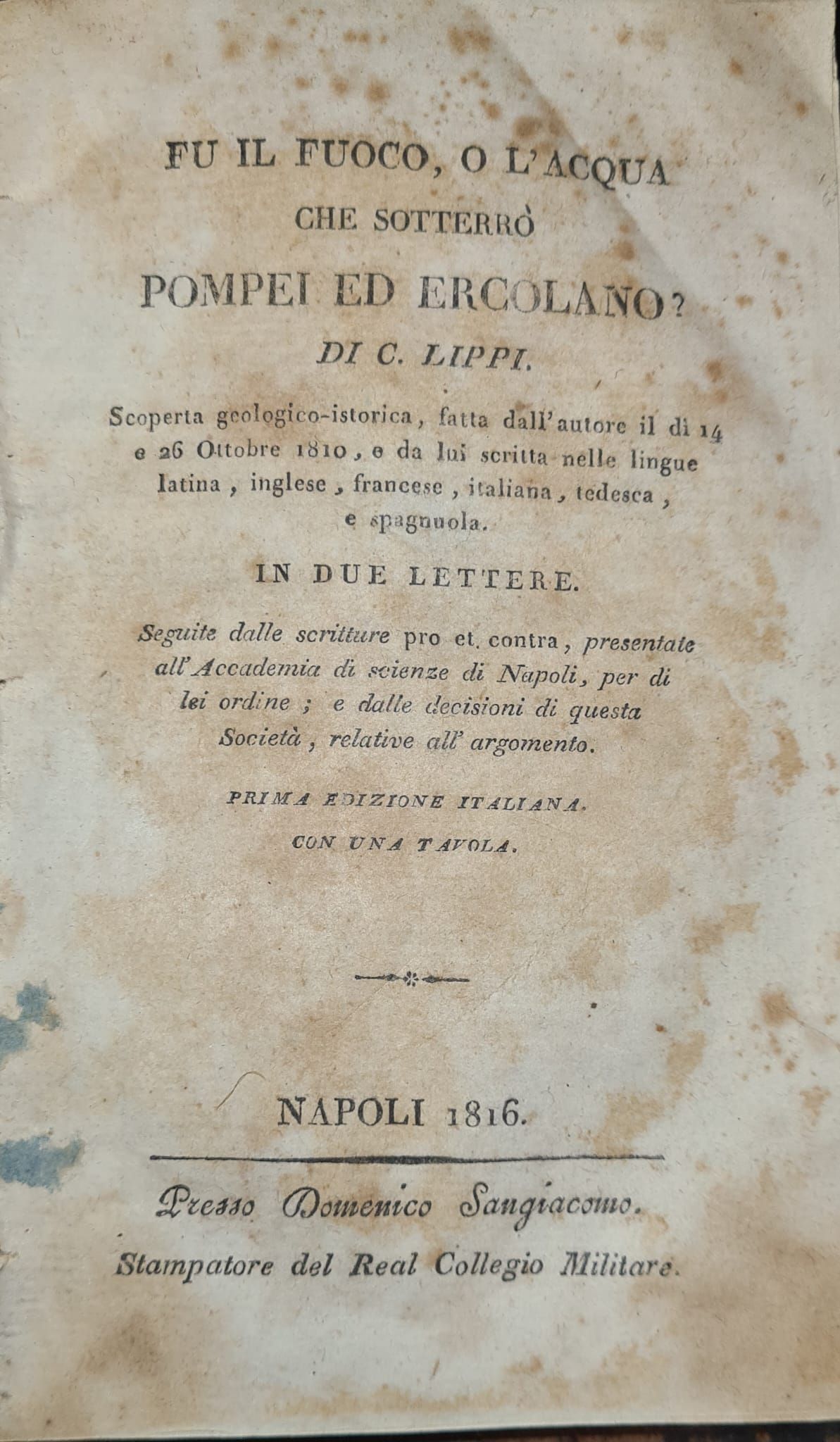
Was it fire or water that buried Pompeii and Herculaneum?
Author: Carminantonio Lippi
Naples, Domenico Sangiacomo 1816.
1 volume in 8° half leather binding with corners, pp. (4) 384, VII, 1 b. 2cc. of index 1 plate at the end of the volume. Anonymous designer and engraver.
Light browning and some stains but a very good example.
Very rare.
The plate, entitled Covering of Pompeii, represents the three layers that according to Lippi covered Pompeii (GG, FF, EE), in particular in the cellar of the Villa of Diomedes (ABCD) of which three different walls are shown (the villa was excavated in 1771-4).
Read more
The schematic nature of the stratigraphic representation, its temporal and alluvial implications, recall the famous schematic stratigraphy in Steno's De solido intra solidum naturaliter contento dissertationis prodromus (Florence, 1669). Without implying any influence (but neither excluding it), the comparison is proposed to underscore how the discovery of Herculaneum and Pompeii re-proposed, in an "archaeological" context, many of the issues debated in geology in previous centuries, including the difficult interpretation of burnt but unconsumed wood, reminiscent of the seventeenth-century geological debate on coal.
This volume collects various texts by Lippi and other authors relating to the controversy sparked in 1810-16, within the Royal Academy of Sciences of Naples, by Lippi's hypothesis of Pompeii's submersion by a "volcanic flood" (cf. pp. 157 ff.). Lippi communicated his hypothesis in 1810 to the secretary of the Academy, Teodoro Monticelli, and in two letters to the famous German geologist Abraham Gottlob Werner (1749-1817). In the academic debate that followed, Lippi was defended by Matteo Tondi and attacked by Saverio Macrì.
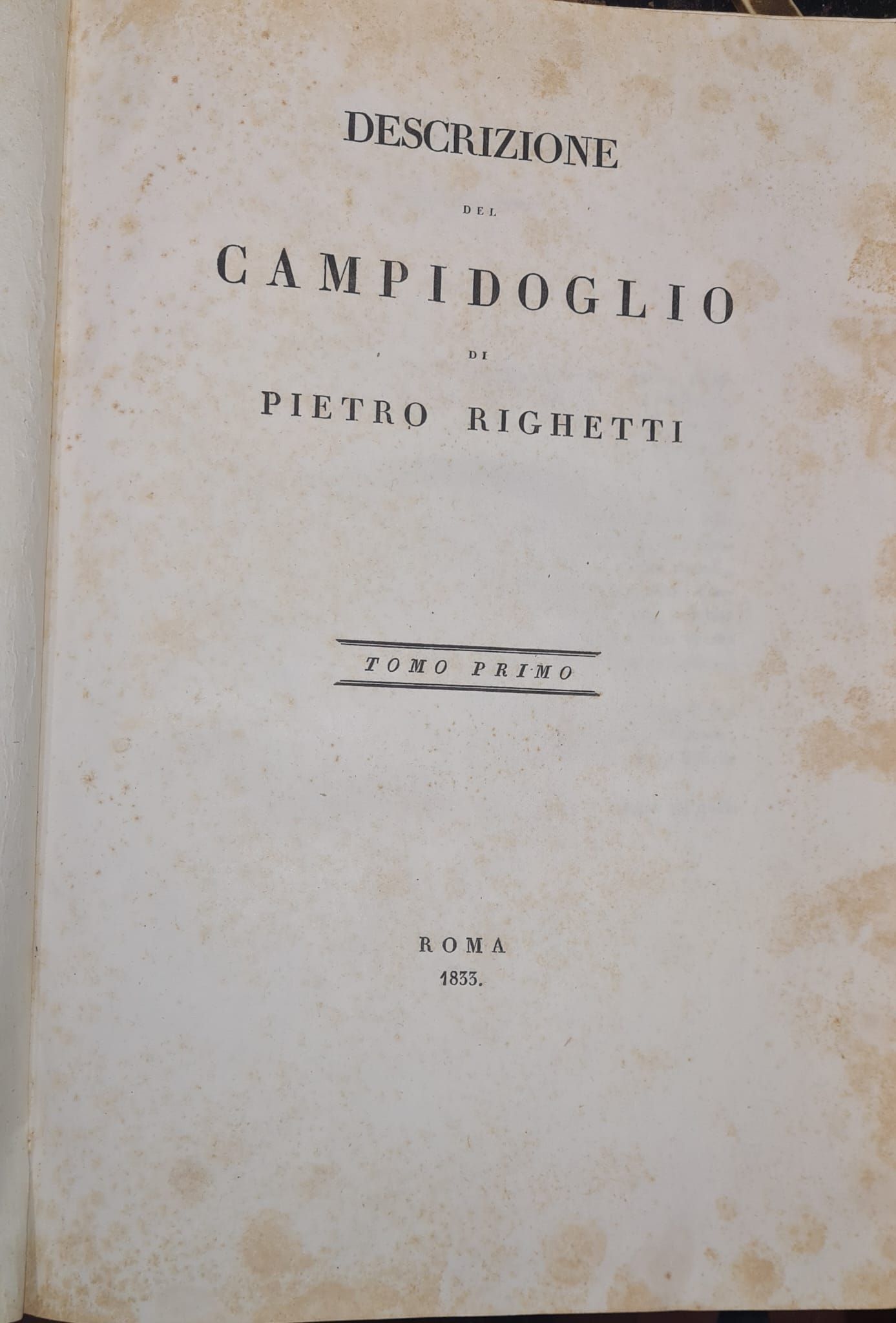
Description of the Capitoline Hill
Rome, 1833-1836
In folio, 2 volumes, bound in half leather with gold titles.
Pp. (4),202; 200,(2); very well illustrated by a total of 390 copper-engraved plates (mostly by Garzoli) which reproduce all the works contained in the Campidoglio, painted or sculpted.
Each plate is extensively described. "Original edition". See Brunet, IV, 1302 - Graesse, VI, 122 - Choix de Olschki, XI, 17949.
Copy with foxing due to the quality of the paper, which is otherwise normal in all copies seen.
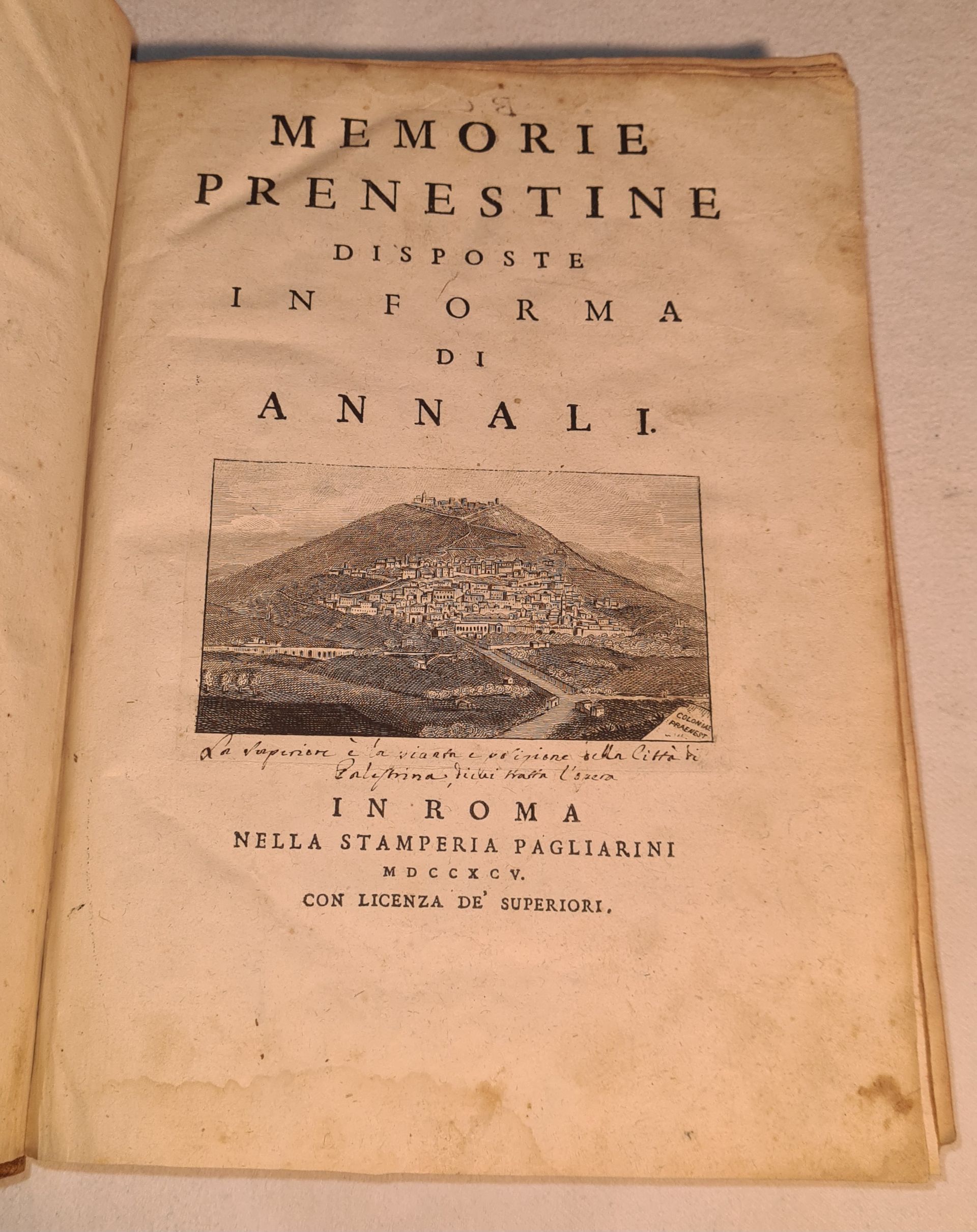
Prenestine Memories
arranged in the form of Annals
AuthorPietrantonio Petrini
In Rome at the Pagliarini printing house, 1795.
1 volume in 4°, bound in contemporary half leather. 517 pages (1 blank) 6 final plates.
Slight water stains and scattered stains, restored lower board and small reinforcements at the corners of the plates, while there are some very small losses in the lower right corner of the last 100 pages, very distant from the text.
Complete.
Read more
The third written work on the history of Palestrina dates back to 1795: Memorie prenestine disposizione in forma di annali. The work, printed in Rome by the Pagliarini Printing House, was authored by Pietrantonio Petrini (1722-1803), a historian from Palestrina known for his great erudition as the "Muratori di Palestrina."
The work comes chronologically after the works of Suarez, Praenestes Antiquae (1655), and Cecconi, Storia di Palestrina città del Prisco Lazio, (1756); it is particularly important because for the first time an ordinary citizen, not religious, attempted a work "that stands out in the context of Palestrina historiography for the peculiar specificity of the cognitive contribution" (Fancelli, 1990). "Pietrantonio Petrini – writes Fancelli again – fully experienced the eighteenth century in its cultural climate, albeit from a necessarily provincial observatory".
His "Memorie prenestine" (Prenestine Memoirs) is his major work, which was reprinted in 1990 by the Circolo Culturale Prenestino "Simeoni" with a preface by Paolo Fancelli. The book is characterized by its annalistic approach and the extensive coverage of the archaeological discoveries unfolding in those years. Dedicated to Prince Stanislao Poniatowski, an art collector, it comprises 517 pages and six engraved plates depicting the map of the diocese of Palestrina, the city's territory and its surrounding walls, a now-lost mosaic, a cist and a mirror, three cameos, a sundial, and a woman's head.
In the preface to the facsimile reprint, Fancelli emphasized that "Petrini's is perhaps, in its own way and in a broad sense, a micro-history, in any case founded on the objective knowledge of the greatest possible number of sources. It is, moreover, a history of facts, and within a territorial context, not just an urban one, with frequent references to a historical-geographical context, predominantly, obviously, Roman. This undoubtedly provides the work with a breadth of knowledge, making it part of a chain of events and stories on a much larger scale. The distinctive feature of this work is that it proceeds systematically in illustrating every event in some way pertaining to the city (discoveries, looting, plagues, construction and restoration of buildings, episcopal settlements, etc.), all largely corroborated by extensive references in the notes to the sources: this is corroborated by the extensive array of epigraphs and archival documents included in the Appendices." The work's Muratorian-inspired philological imprint is evident... The discourse unfolds in a rigorously annalistic form, in dry and precise terms... and therefore – concludes Fancelli – the facsimile reprint of Pietrantonio Petrini's Memoirs has long been called for so that the volume will be more easily accessible even to those who may be preparing to fill the gaps in Praenestine historiography and it is a fruitful investment for any future study".
Petrini died on July 29, 1803; on the occasion of the first centenary of his death, the City of Palestrina remembered him with a plaque on the facade of his birthplace, in Piazza Garibaldi.
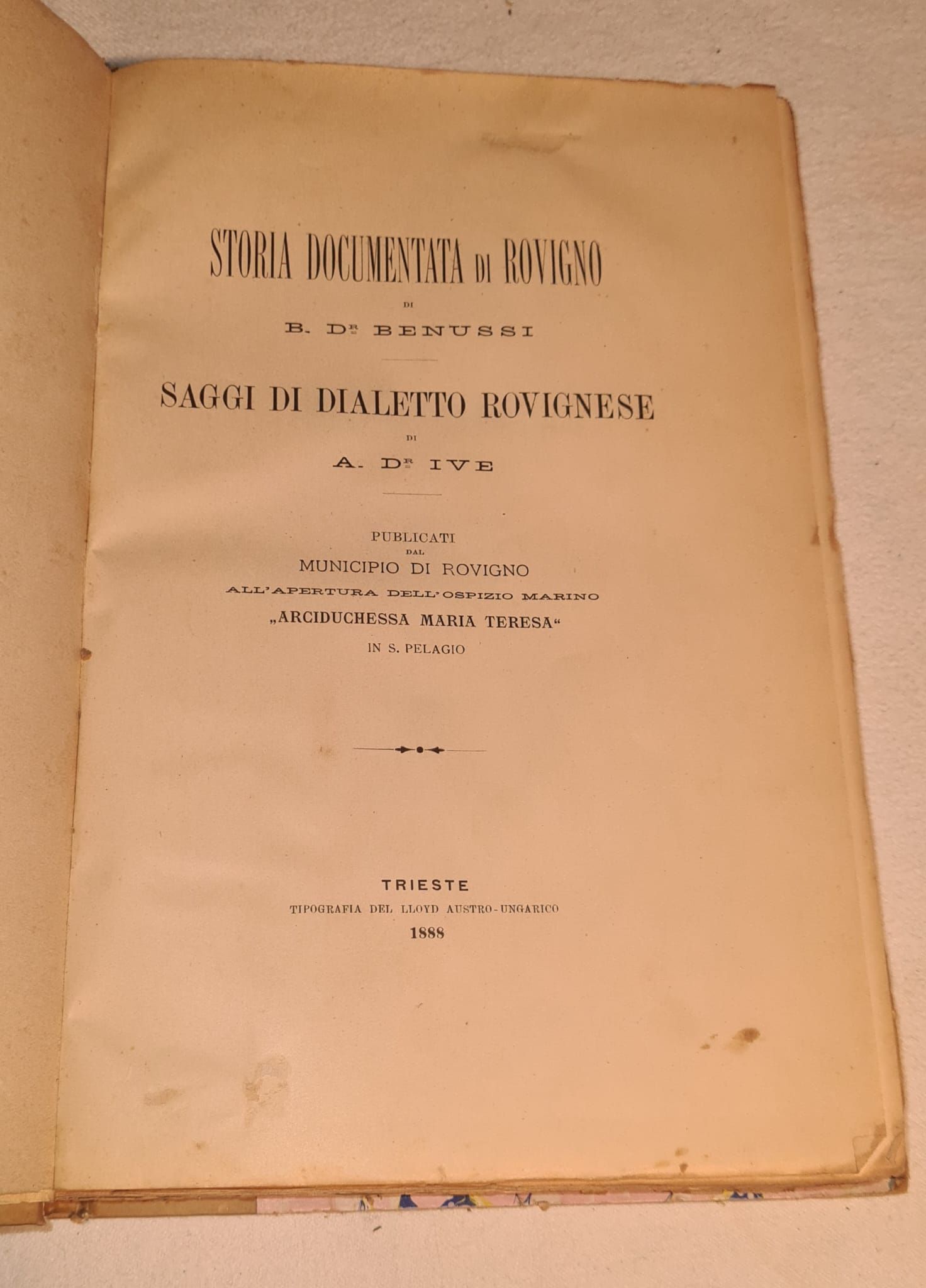
Documented history of Rovinj
Author: B. Benussi
Written by a professor at the Trieste Municipal Gymnasium. Published by the Municipality of Rovinj upon the opening of the "Archduchess Maria Teresa" Marine Hospice in San Pelagio.
Essays on the Rovinj dialect by A. Ive, Lloyd,, Trieste, 1888.
1 volume in-8°, pp.(8) 396, 78. Contemporary half-cloth binding with decorated paper on the covers, leather cover with gold title on the spine, which retains the original paperback, in burls.
Perfect copy.
The territory, political history, the Venetian period, Austrian and French domination, the churches, convents and the Rovinj dialect.
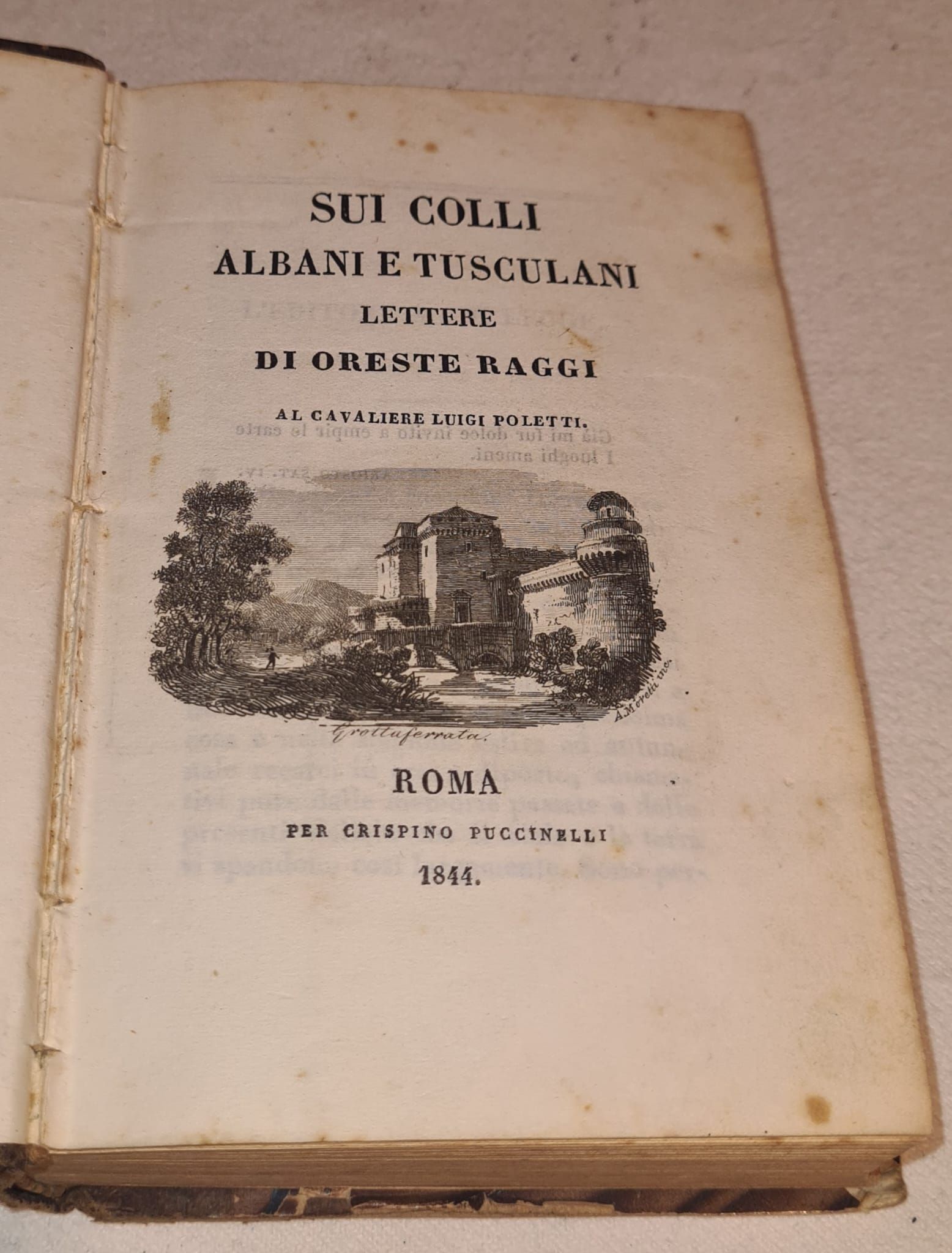
On the Alban and Tusculan hills
Author: Oreste Raggi
Rome, for Crispino Puccinelli, 1844
Letters from Oreste Raggi to Cavaliere Luigi Poletti.
15 cm, pp. VIII-414. With 9 engravings in the text, including a woodcut vignette on the title page and 8 copper-engraved plates. All with views of the areas described. Solid and elegant contemporary half-leather binding, smooth spine with gilt titles and decorations.
Fresh specimen in excellent condition, with only a few tiny scattered stains.
Of the Baths of Pisa - Treatise
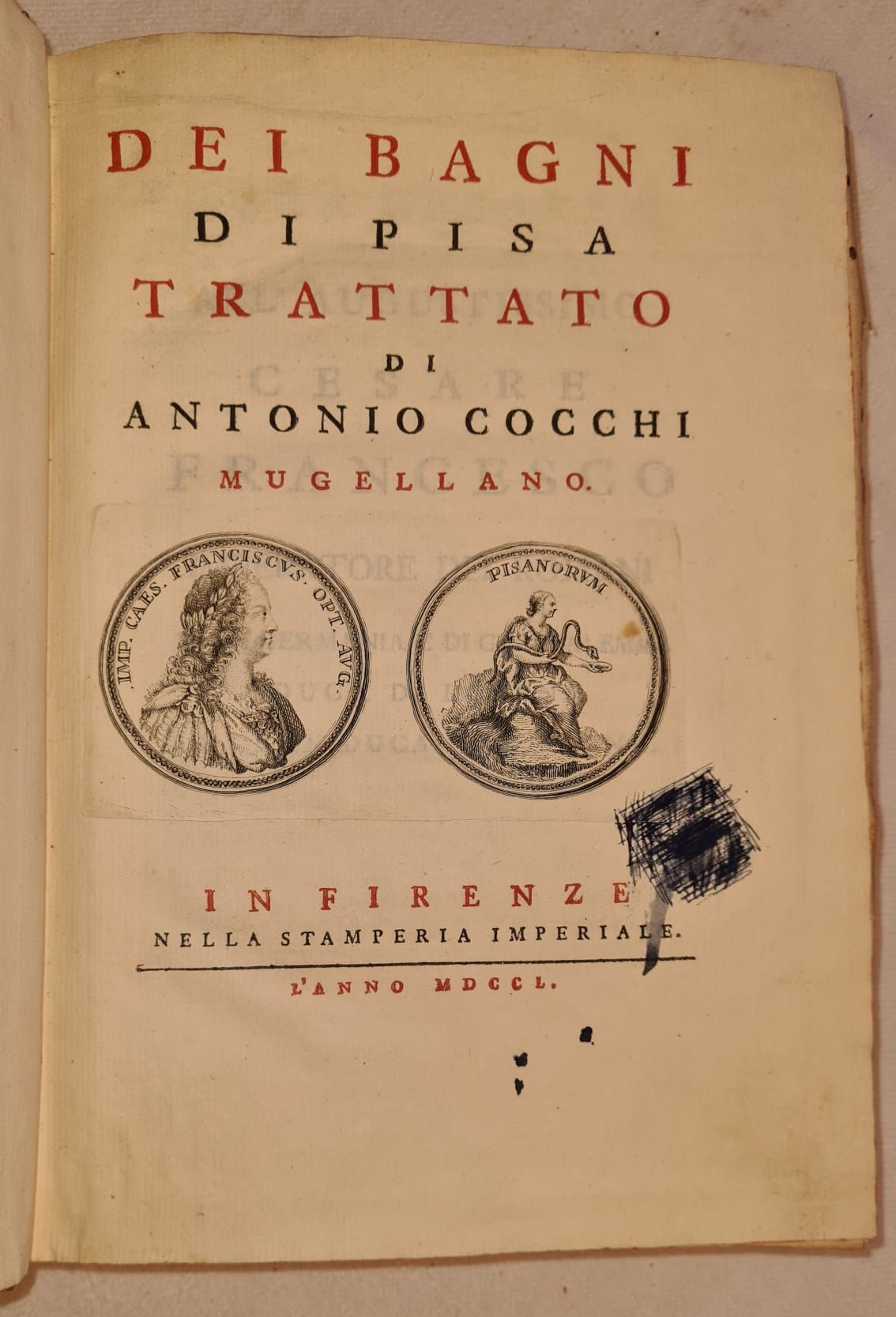
Author: Antonio Cocchi
Publisher: Florence, in the Imperial printing house, 1750. First edition.
1 quarto volume [12], 415, [1] pages, and [7] engraved folding plates with maps, plans, and views. Title page printed in red and black. Engraved title vignettes (2 medals depicting the Holy Roman Emperor Francis I and the goddess Salus suckling a serpent from a hand-held plate); woodcut initials.
Bound in full vellum with a gilt title on the spine. Signature on the buttonhole and a cancellation on the title page. Otherwise, a very fine copy printed on high-quality paper.
Read more
Reference: Lozzi, 3645; NLM XVIII secolo, p. 91. Comprehensive essay on the natural history, social history, and medicinal properties of the waters of San Giuliano Terme (known since ancient times as Bagni Pisani). In 1743, the Grand Duke of Tuscany moved his summer residence near the so-called "Bagni di Pisa," an ancient thermal spring far from the city, enclosed in an elegant neoclassical hospital building and renowned for its medicinal properties. He instituted several improvements to the area, including restaurants, inns, a renovation of the hospital building, and a scientific study of the water and its medical applications. For this he enlisted the services of Antonio Cocchi, professor of anatomy at the University of Florence (the same chair previously held by Francesco Redi) and known throughout the European "republic of letters" as a naturalist, historian of science, and advocate of vegetarianism.
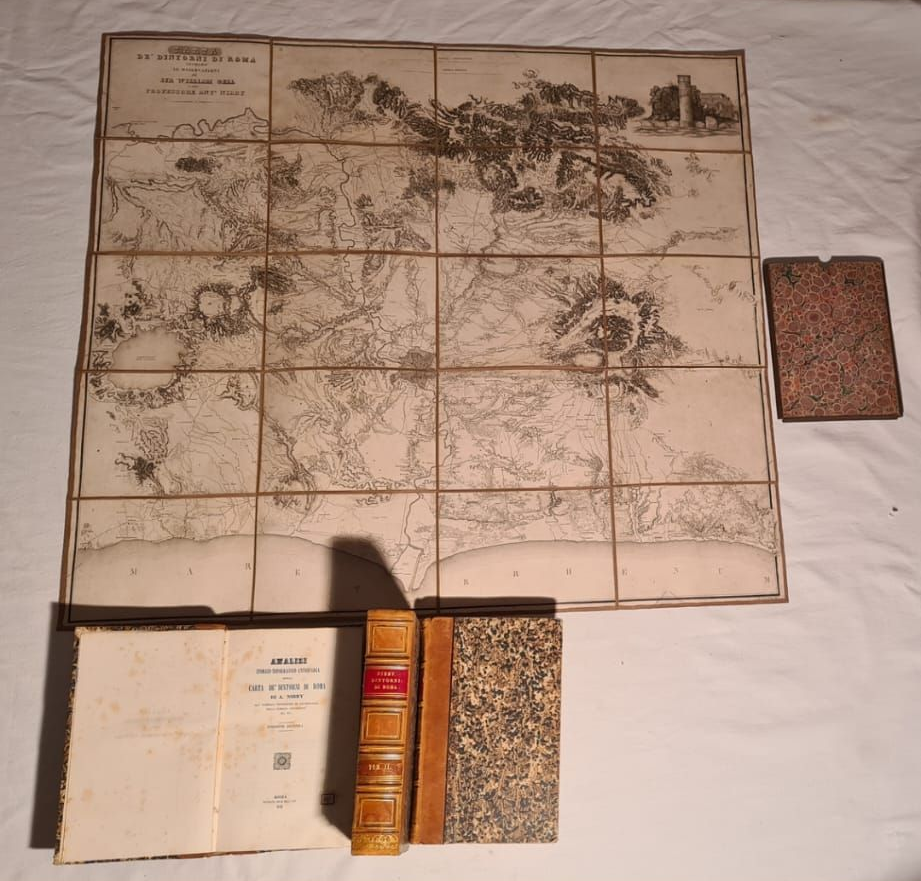
Antiquarian historical-topographical analysis of the map of the surroundings of Rome
Second edition
Author: Nibby Antonio
Publisher: Volume I (Volume II and Volume III) Typography of the Fine Arts 1848-9, Rome.
Excellent early 20th-century half-leather bindings with raised bands, decorations, and titles stamped in gold on the spine. Excellent copy with erasures. Olschki, 17654 (for the original 1837 edition); Rossetti, 7395. 8vo (23.4 cm), 3 vols.; 4 cc.nn., XLVIII pp. (Preliminary Discourse), 2 cc.nn., 555, 679, 753 pp. (joined) Map of the environs of Rome according to the observations of Sir William Gell and Professor Antonio Nibby (large lithograph map, 84 x 74.5 cm - dated 1827 and engraved by Filippo Trojani - in excellent condition, backed by canvas and folded several times in its original pocket.
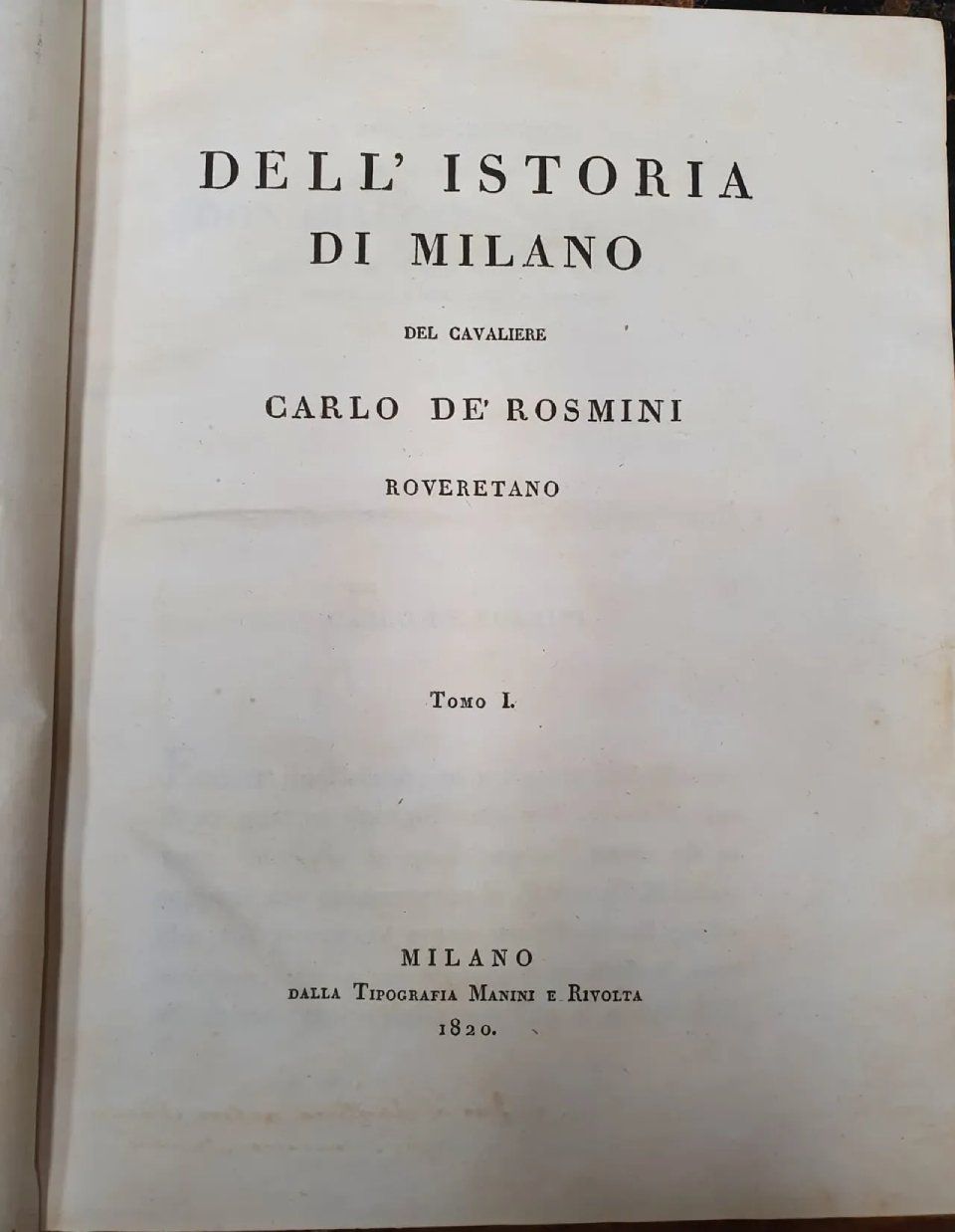
Of the History of Milan
First edition of this classic history of the city
Author: Carlo De Rosmini
Publisher: Milan, Manini and Rivolta Printing House, 1820.
Four volumes in 4°; XI, 428 pp., 1 c. (index of plates), 6 plates outside the text - 534 pp., 1 c. (index), 12 plates outside the text, 1 map - 594 pp., 1 c. (index), 5 plates outside the text - 528 pp., 1 folded map of Milan; beautiful contemporary half-leather bindings with gilt inserts and titles on the spine.
First edition of this classic history of the city.
Read more
The period covered extends from the earliest times to 1535. The author also wrote a continuation up to 1740, but it has remained unpublished to date. The iconographic contribution is also noteworthy, consisting of numerous plates and engravings, including the large city map and the map of the Duchy.
Volume IV is entirely dedicated to the collection of unpublished documents that accompany the work. Zannoni, 'Antologia' T XXVIII p. 140 et seq.: "This history was praised for its accuracy, impartiality, sound criticism, and for being written in a rapid, clear, and elegant style.
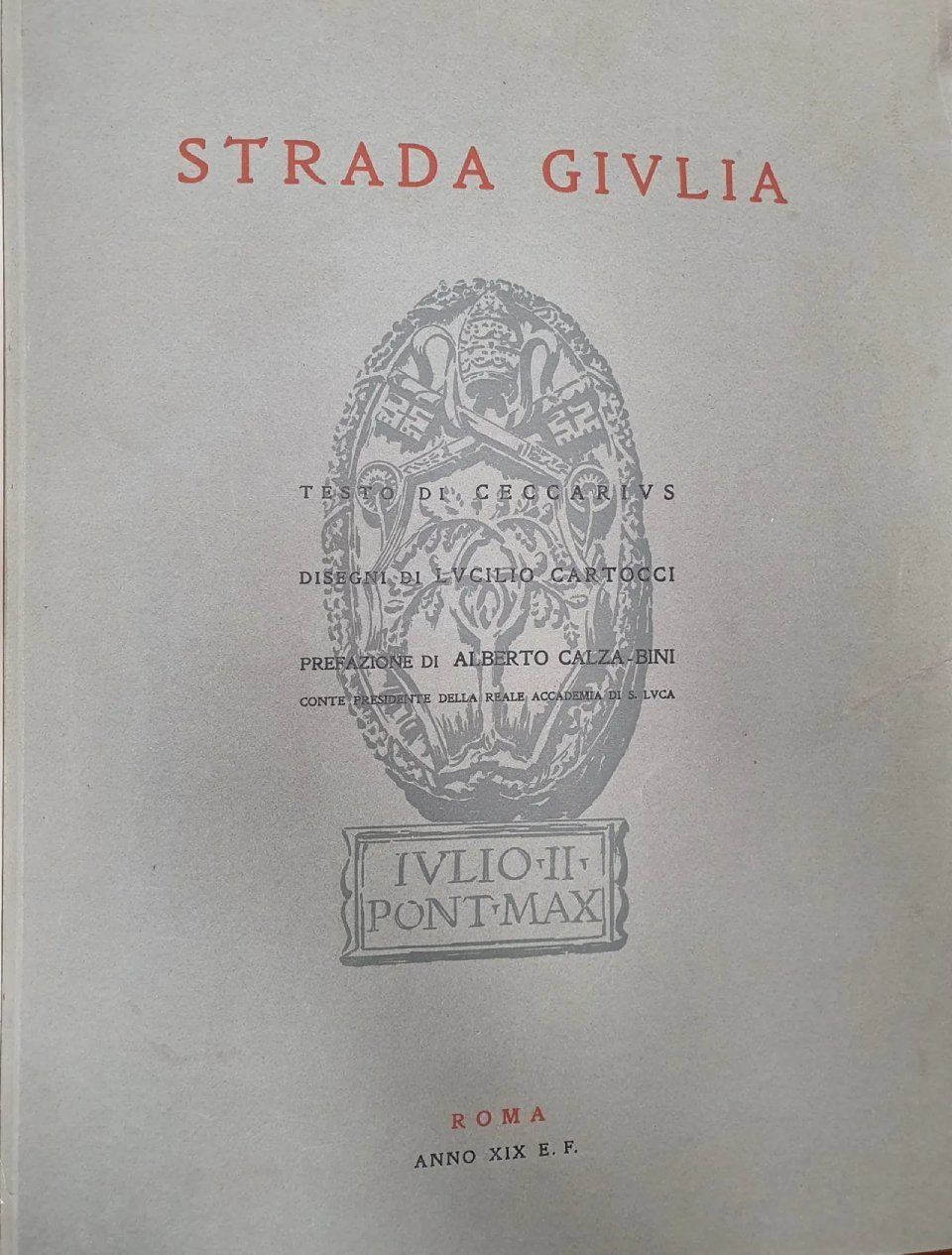
Giulia Street
Folio volume
Author: Ceccarius
Publisher: M. Danesi - Rome 1940
Half cloth binding with leather binding and gold lettering.
Monumental edition limited to 235 copies.
Drawings by Lucio Cartocci, preface by Alberto Calza-Bini
With 59 full-page plates, protected by tissue paper, various engravings in the text and two views of Via Giulia and Rome from the Janiculum (signed AEB) number of pages: 108 index of plates and notes.
One folio volume (43.8cm. x 34cm.)
Binding that has taken a little moisture but excellent interior.
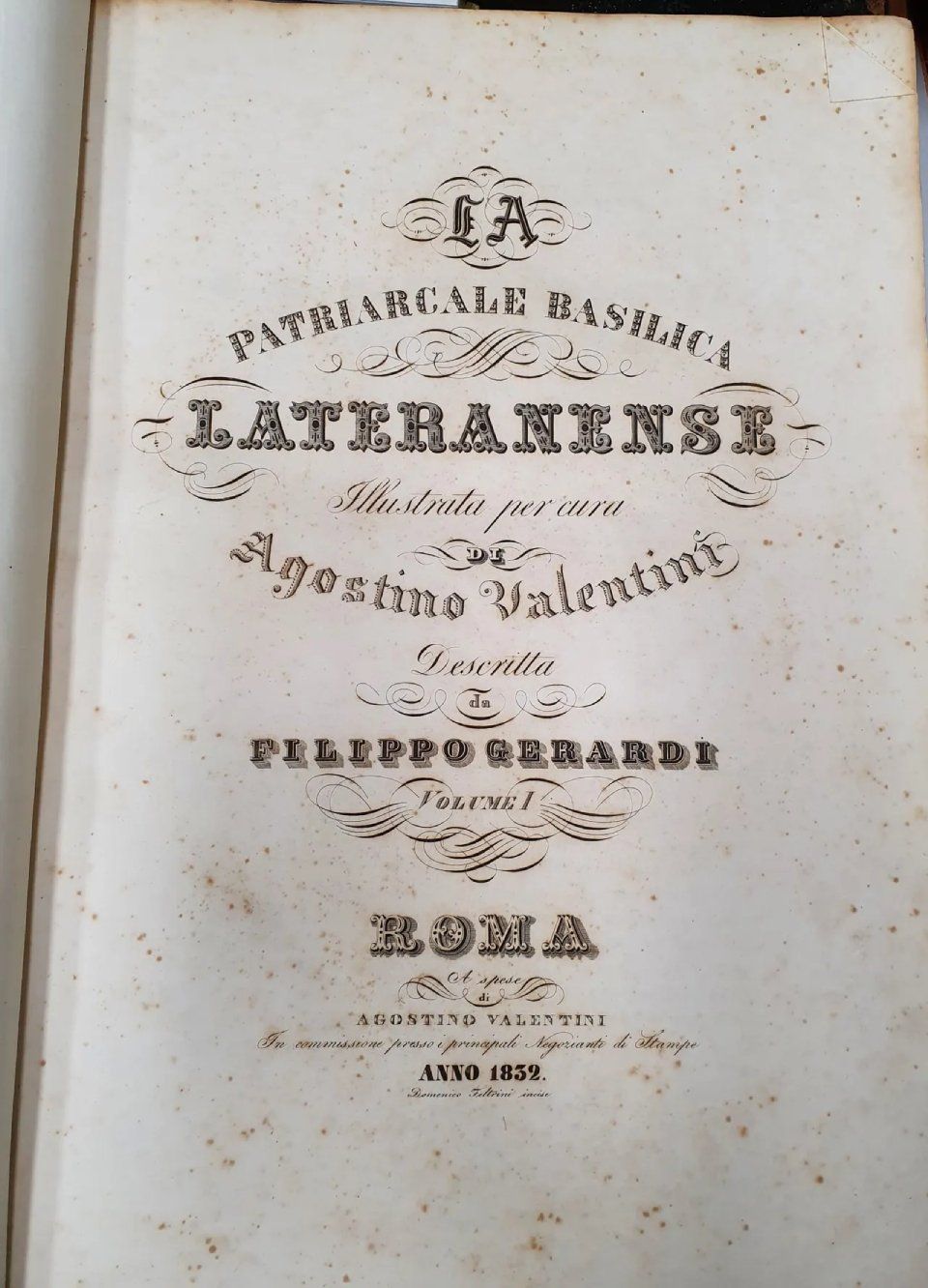
The Patriarchal Lateran Basilica
Illustrated by Agostino Valentini and described by Filippo Gerardi - 2 volumes
Author: Valentini Agostino and Filippo Gerardi
Format cm. 46x32. Volume I: Pages (4), 82, (4). Volume II: Pages 90.
Contemporary half-leather binding with title tags and gilt decorative motifs on the spine. Some stains and browning inside. Overall very good condition.
Monumental and magnificent two-volume work on St. John Lateran containing 136 full-page engravings (56 in the first volume and 80 in the second) depicting the basilica, its architectural structures and the works of art it contains.
The engravings are of extraordinary finesse and precision.
Of Venetian inscriptions
Author: Stork
Place: Venice, 1824-53
Vols. 6 in 7 volumes, in large 4°, bound in half leather.
Transcription of epigraphs from 1000 AD onward in Venice and the islands, including those lost and recovered in documents. After illustrating the site of each group of inscriptions, the author provides valuable dissertations on individuals, families, and events, with meticulous reference to sources, making this an essential document for the civil, religious, artistic, literary, and noble history of Venice.
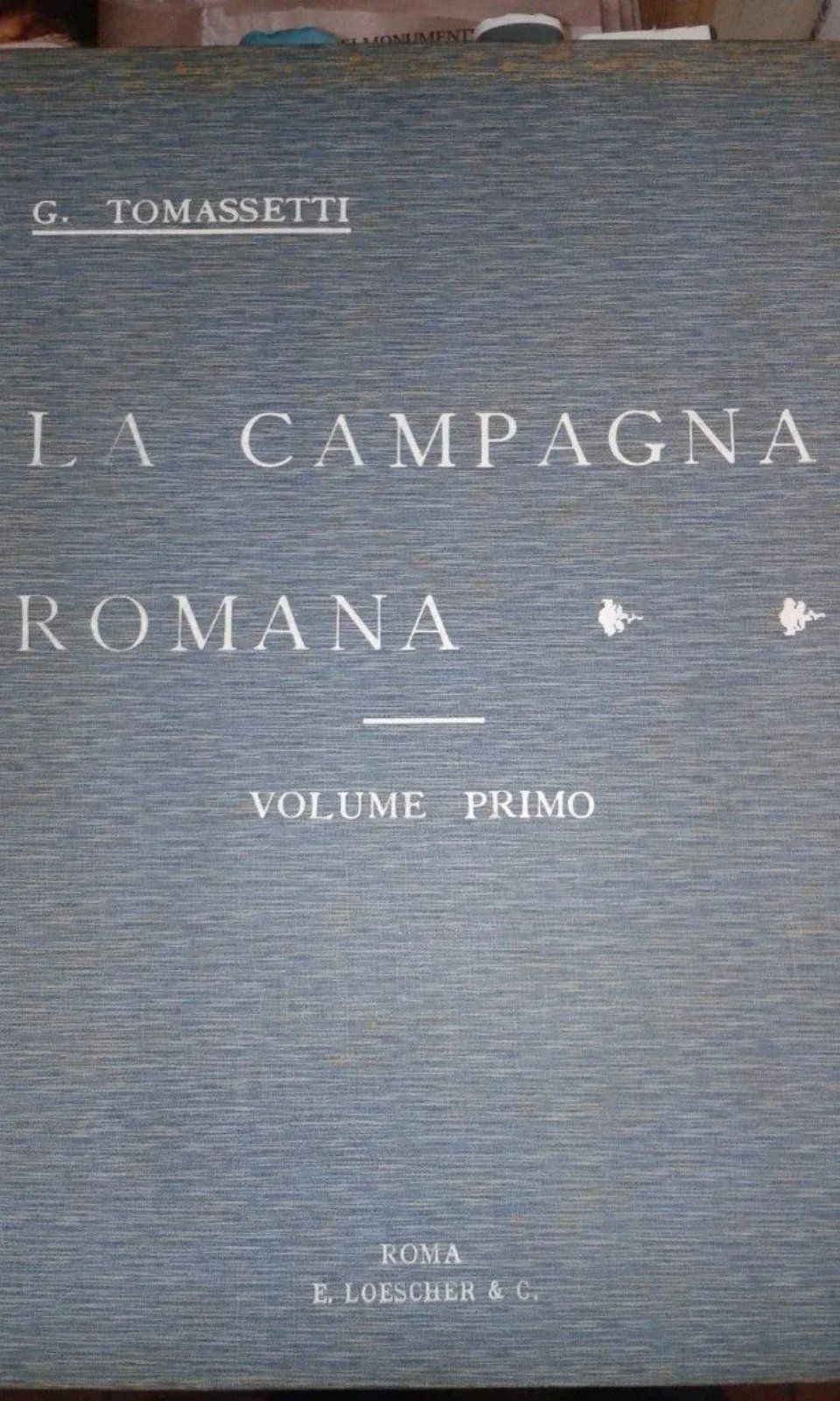
The Roman countryside
Volume One
Author: G. Tomassetti
Edition: Rome, Loescher & C., 1910-12.
4 volumes bound in editorial cloth, rare first edition.
Excellent copy.
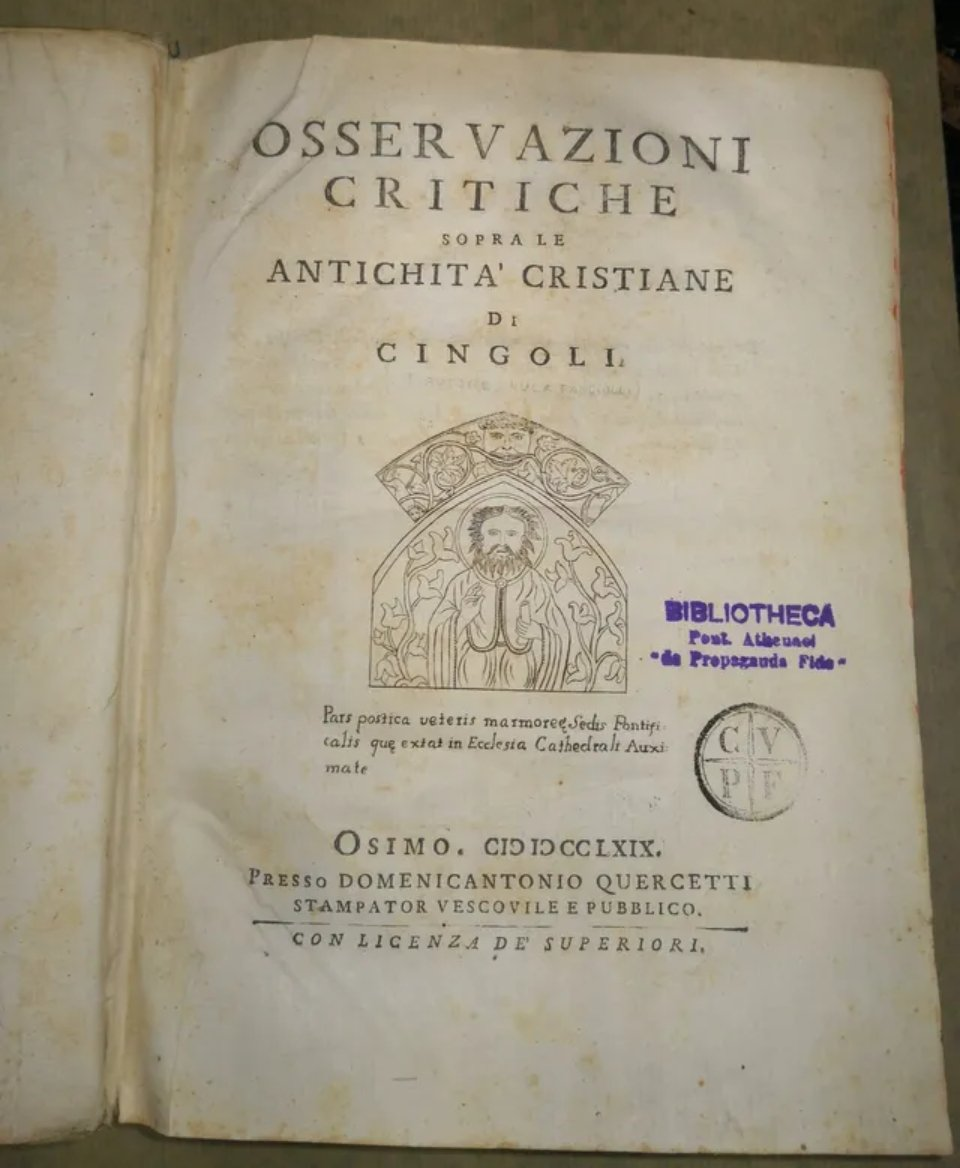
Critical observations on the Christian antiquities of Cingoli
2 volumes
Author: Luca Children
Publisher: Quercetti, Osimo, 1769
2 parts in two large volumes in small folio, in contemporary full parchment binding, bound with: Dissertations or essay on reasons for which the legend of Saint Esuperanzio, protector of the city of Cingoli, is demonstrated, Same data typ. 1771. Bound with: Second dissertation...., same data, bound with: Animadversiones in collegationem causidicorum cingolana Jura tuentium in causa confirmationis lectionum.... SD, ma 1771/72.
Beautiful set on Cingoli with engraved plates, some folded, including the beautiful engraving of the diocese of the church of Osimo.