


Foreign literature
Cesaretti Library

Texts from international cultural contexts
The foreign literature section is dedicated to authors and works from international cultural contextsNovels, essays and critical texts allow us to explore different literary traditions, offering a broad view of the editorial production beyond borders nationals.
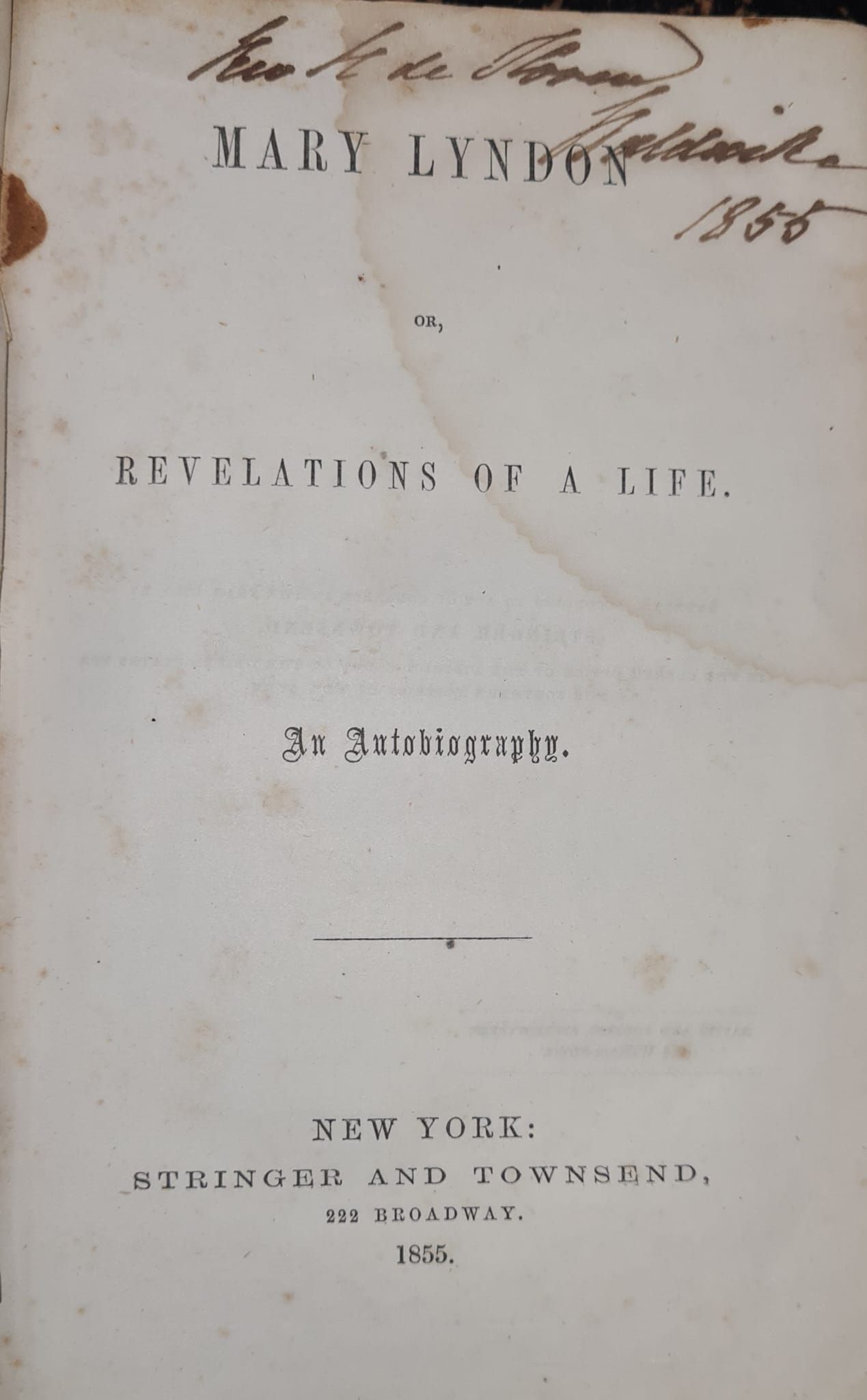
Mary Lyndon, or Revelations of a Life.
An Autobiography
Autore: Mary Gove Nichols
Editore: New York: Stringer & Townsend, 1855.
Publisher's original blind-stamped cloth binding with gilding on the spine. Mauve endpapers.
19.5 x 12.5 cm. 388 pages [32, advertisements]. Spine faded and delicately rolled. Contemporary ownership inscription on the title page.
First edition.
A surprisingly rare work advocating sexual consent and marital liberty, the OCLC lists 17 hard copies in the United States and last appeared at auction in 1961.
Read more
The most widely read book advocating free love in the 1850s was Mary Gove Nichols's pioneering account of a woman who makes a poor choice with her first husband but breaks free and develops intimate relationships with other male companions. When she finally meets a serious lover, she intends to live with him despite society's disapproval. At the last minute, a divorce from her first husband materializes, allowing the book to have a conventional happy ending with her marriage to the new man. Yet the bride, in a highly unusual voice, vows: "In marrying you, I give up no rights of my soul. I make no covenant to be faithful to you. I promise only to be faithful to the deepest love of my heart. If that love is yours, it will bear fruit for you and enrich your life, our life. If my love keeps me from you, I must go. Labeled "An Autobiography," the novel-like book aroused readers' sympathy for a wife stuck in an unloving marriage... It was the first autobiography by an American woman to address these issues and provide revelations about intimate marital relationships" (Public and Print Cultures of Sex).
Mary Gove Nichols's book was part of a broader life and career dedicated to the belief "that a woman had the right to say no to sex" as well as "the right to say yes, and the right to say yes to whomever she pleased" (Public and Print Cultures of Sex). After her unhappy marriage to a conservative Quaker husband, she was motivated to publicly advocate for women's broad sexual knowledge. "In 1838, she developed a twelve-part course on women's physiology, including one on female masturbation for young women and one for married women only on women's right to regulate sex in marriage," and within two years she was arguing that "wives had the right to say no" (Public and Print Cultures of Sex). Upon her second marriage, to activist Thomas Nichols, who similarly supported women's rights to sexual expression, abortion, and consent within and beyond marriage, she expanded her reach. This autobiography was a crucial embrace of her own identity and “illuminated the lives of ordinary people, with unconventional ideas about sexuality, letting them know that others like them existed” (Public and Print Cultures of Sex).
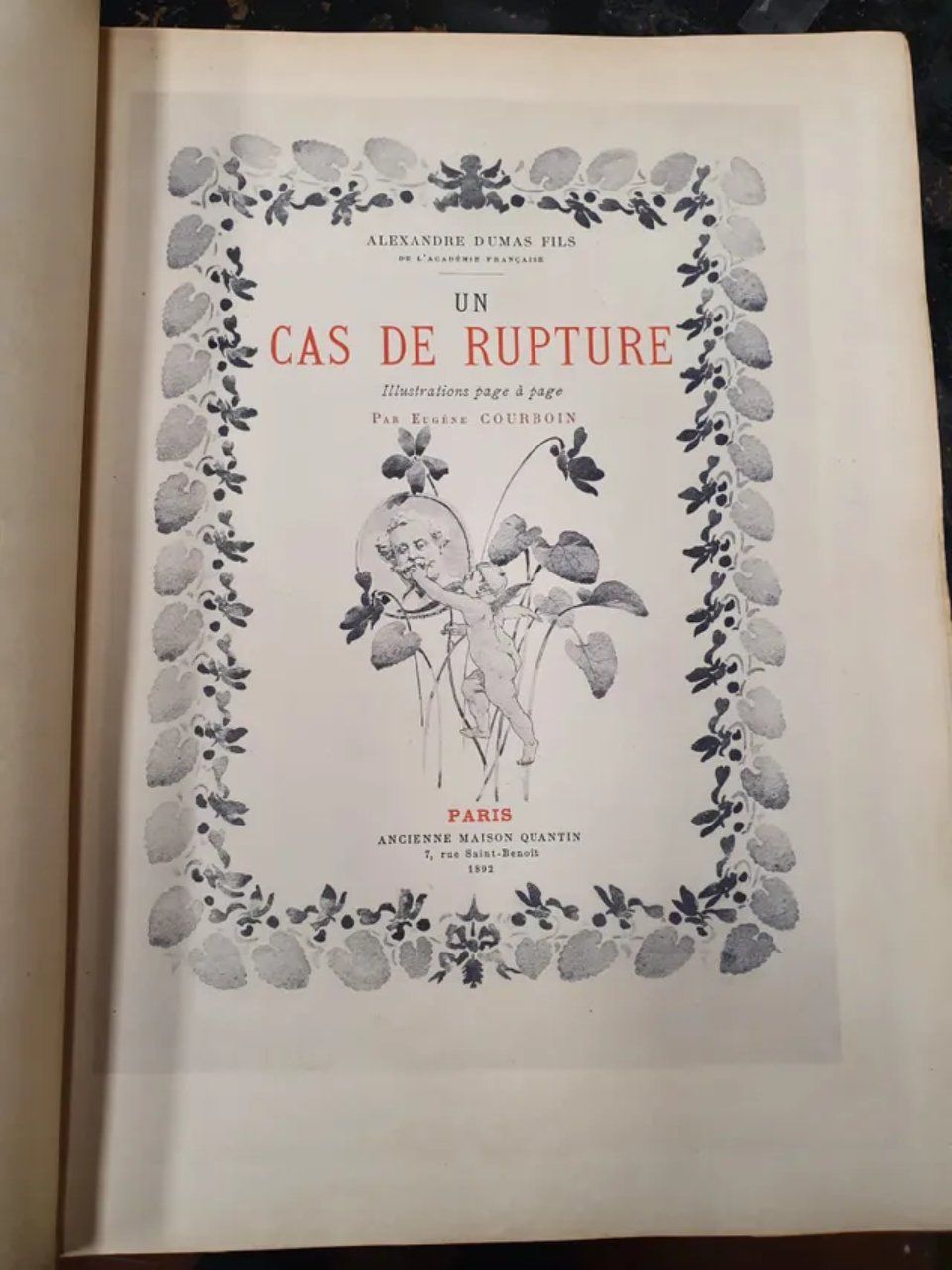
A Case of Rupture
AuthorAlexandre Dumas Fil
Editore: Parigi, Quantin, 1892.
Illustrated with large full-page drawings by Eugene Courboin.
Small folio, bound in brown half leather with gilt title on the spine, and marbled boards.
One of only 40 copies printed on Japanese paper, with a duplicate of all the illustrations, printed on separate plates.




